
Eugenia Kuyda presented a chatbot called IO onstage at TechCrunch Disrupt in 2014, and TechCrunch's Rebecca Bellan reported on October 19 that she has now built the kind of personal assistant she pitched then. IO acted as a lifestyle concierge for booking restaurants, vacations and other tasks and was the first product from her startup, Luka, which later became Replika. Last year she left as Replika's CEO and founded Wabi.
Looking back
Kuyda said of IO: “It still worked.” She added: “It was pretty magical… but, of course, it's nowhere near what we have today.” In an October 7 post on X she wrote that they were building personal agents 11 years ago.
What Wabi is
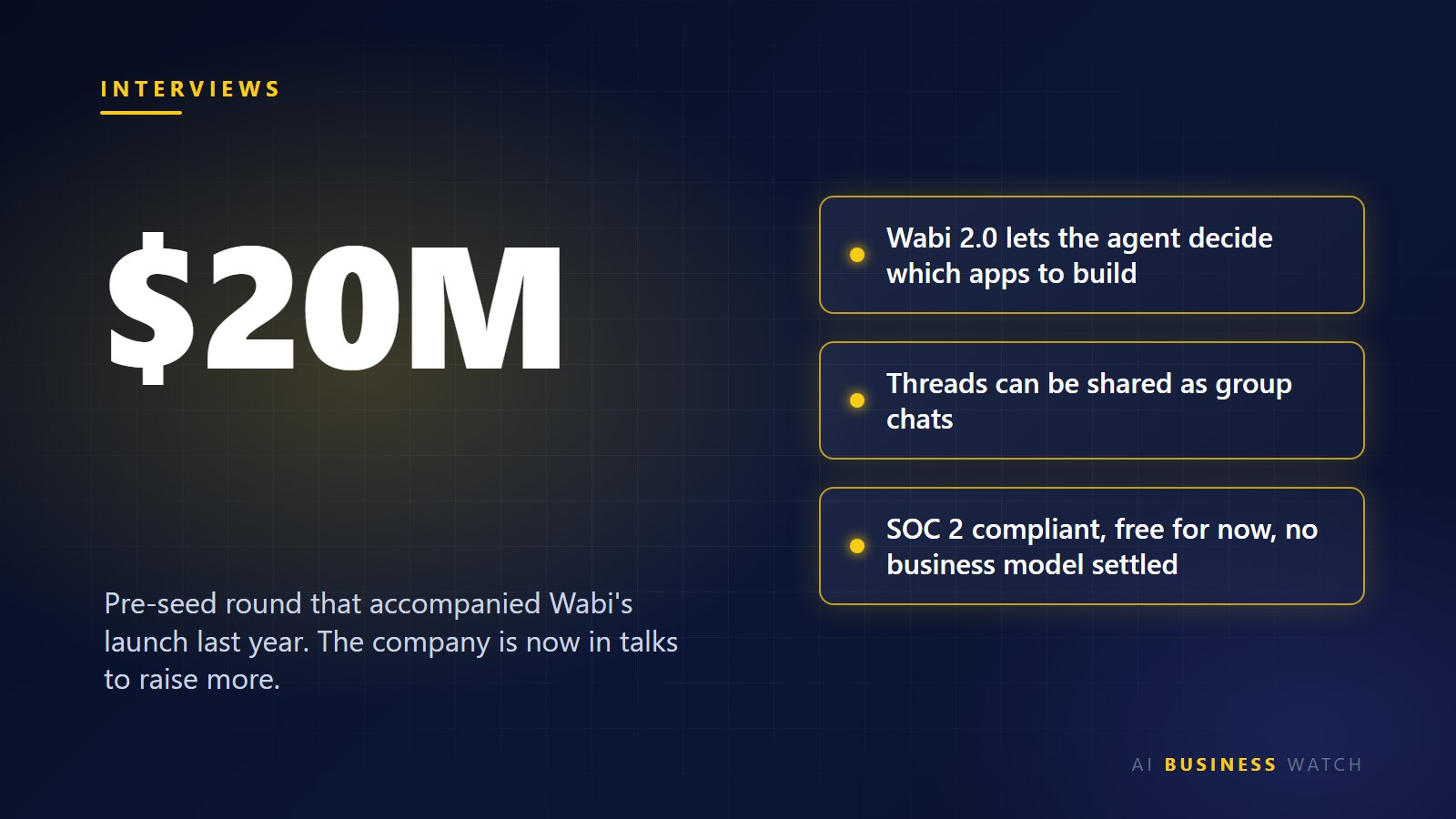
Wabi launched for all users on Monday as a multiplayer personal AI assistant that functions as a messaging app. Users can maintain multiple agentic threads for different tasks and long-term goals and, within threads, build custom apps such as a weight-loss tracker. With Wabi 2.0, the agent decides which apps to build, and connecting email automatically creates starter threads and apps. The launch is a pivot from last year's pitch of a social platform for creating mini apps from prompts, which came with a $20 million pre-seed round. Kuyda said people love personal software but “maybe don't want to spend a lot of time, or any time, building it.”
Multiplayer
Kuyda said: “It's doing what Instinct and Muse do, but it also has all these apps, which helps users do more stuff.” She argued that single-thread experiences get worse over time and that “I don't think anyone has yet cracked multiplayer.” Threads can be shared as group chats, and the article notes AI researchers say longer chatbot conversations are more likely to hallucinate and lose context.
Privacy and business model
Access is scoped to individual chats, and everyone in a chat can see when someone's personal information is requested. Wabi is SOC 2 compliant, runs entirely in the cloud and stores most user data in the US. It is free for now, has not settled on a business model and is in talks to raise more funds.
Source: TechCrunch. This is an AI Business Watch summary of the original report.