
Ruipeng Liu, a senior lecturer in finance, and Sagarika Mishra, an associate professor, both at Deakin University, argue in an October 13 piece in The Conversation that circular financing makes it unclear how much of the AI boom reflects real end-user demand and how much is a bubble. They state that this does not mean AI is fake and that the issue is timing. The analysis is theirs, and the figures are cited from other sources.
The mechanism
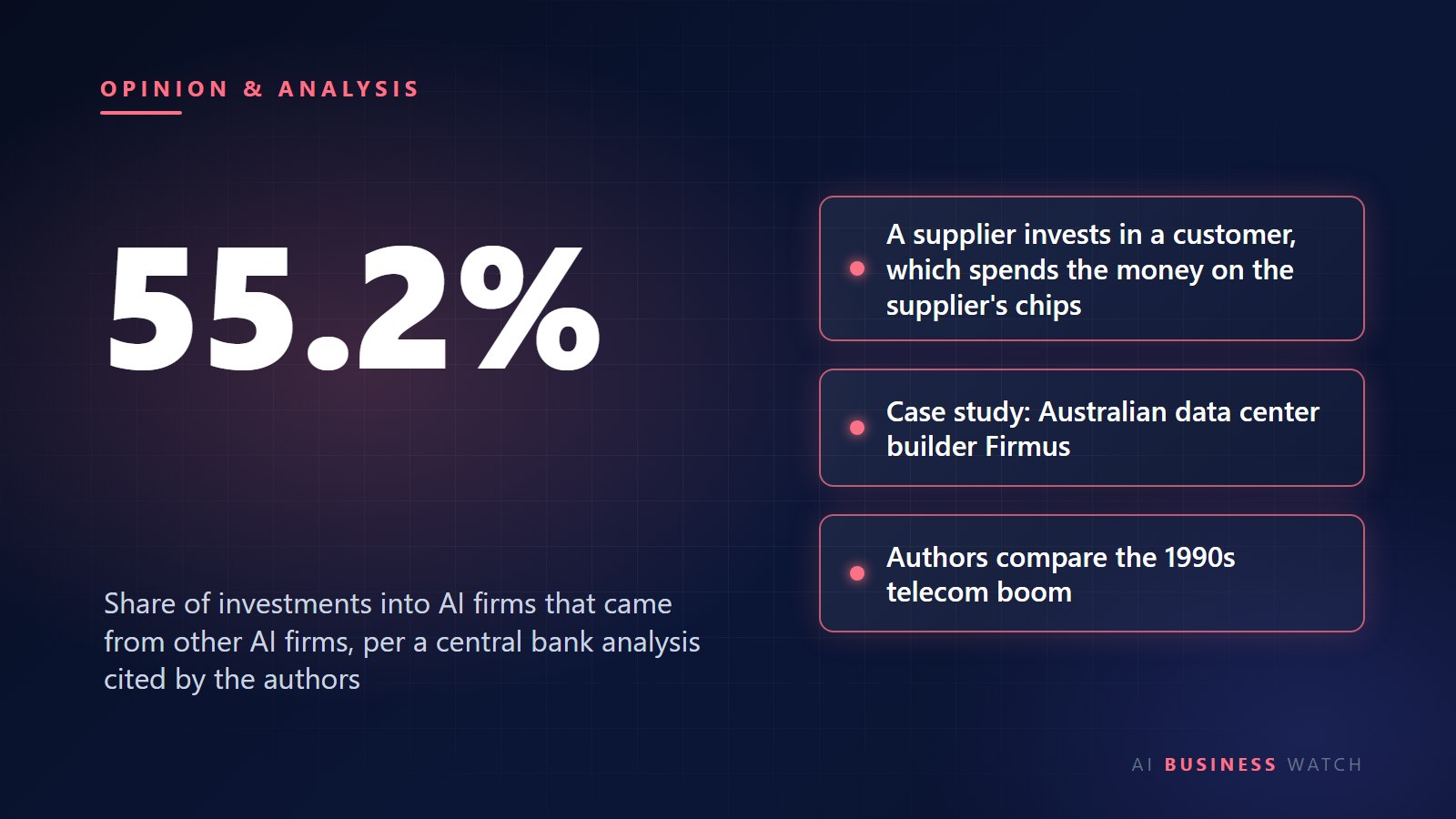
A chip supplier invests in a customer, such as a data center builder, the customer spends that money on the supplier's chips, and both companies report growth. The authors call the method opaque. They cite a bulletin from the Bank for International Settlements finding that 55.2% of investments into AI firms came from other AI firms.
The figures
Nvidia will invest $30 billion in a private funding round in OpenAI and guarantee up to $105 billion for an OpenAI data center in Ohio, according to reports the authors cite. It has invested up to $10 billion in Anthropic and bought $2 billion of shares in CoreWeave, and made more than 50 investment deals in AI companies in 2024. The Financial Times reported OpenAI's annualized revenues were $20 billion lower than the company had suggested, and its shares fell. Chipmakers contributed around 70% of S&P 500 gains in 2026, with Nvidia the index's largest company at about 8.06%, and nearly 90% of Australian households are exposed to AI stocks through superannuation.
The Firmus case study
Australian data center builder Firmus abandoned plans to list on the ASX. Nvidia plays three roles with it: investor, having put in A$330 million in September 2025 and joined later rounds, supplier, through its DSX AI factory platform, and customer, having signed for a Batam, Indonesia data center worth up to $30 billion over six years. OpenAI is an anchor customer at Firmus's Malaysian data centers.
The authors' view
They argue circular deals concentrate risk, so trouble at one firm can spread across the sector. They note the Reserve Bank of Australia's warning about pockets of higher-risk companies and a debt-financing cycle that is becoming more opaque and circular. They compare the 1990s telecom boom, when Cisco financed customers and too much fibre was laid too soon, but note that fibre lasted decades while the newest AI chips have a shelf life of only a few years. If expected demand arrives late or below forecasts, they write, shareholders and super funds will bear the losses.
Source: The Conversation. This is an AI Business Watch summary of the original article.