
Christopher Koopman, CEO of the Abundance Institute, argues in a Fortune commentary published October 9 that Sam Altman has the history of progress backward. This summary separates what Koopman cites from what he argues. The views are his.
The setup
Koopman starts from Altman's September 23 remarks to the United Nations. As Koopman reports them, Altman said AI could be “a new Renaissance of creativity and discovery” or “a new Industrial Revolution of upheaval and disarray,” and called for international cooperation and standards. Koopman reads this as a call for a regulatory regime and says it is backward.
The history he cites
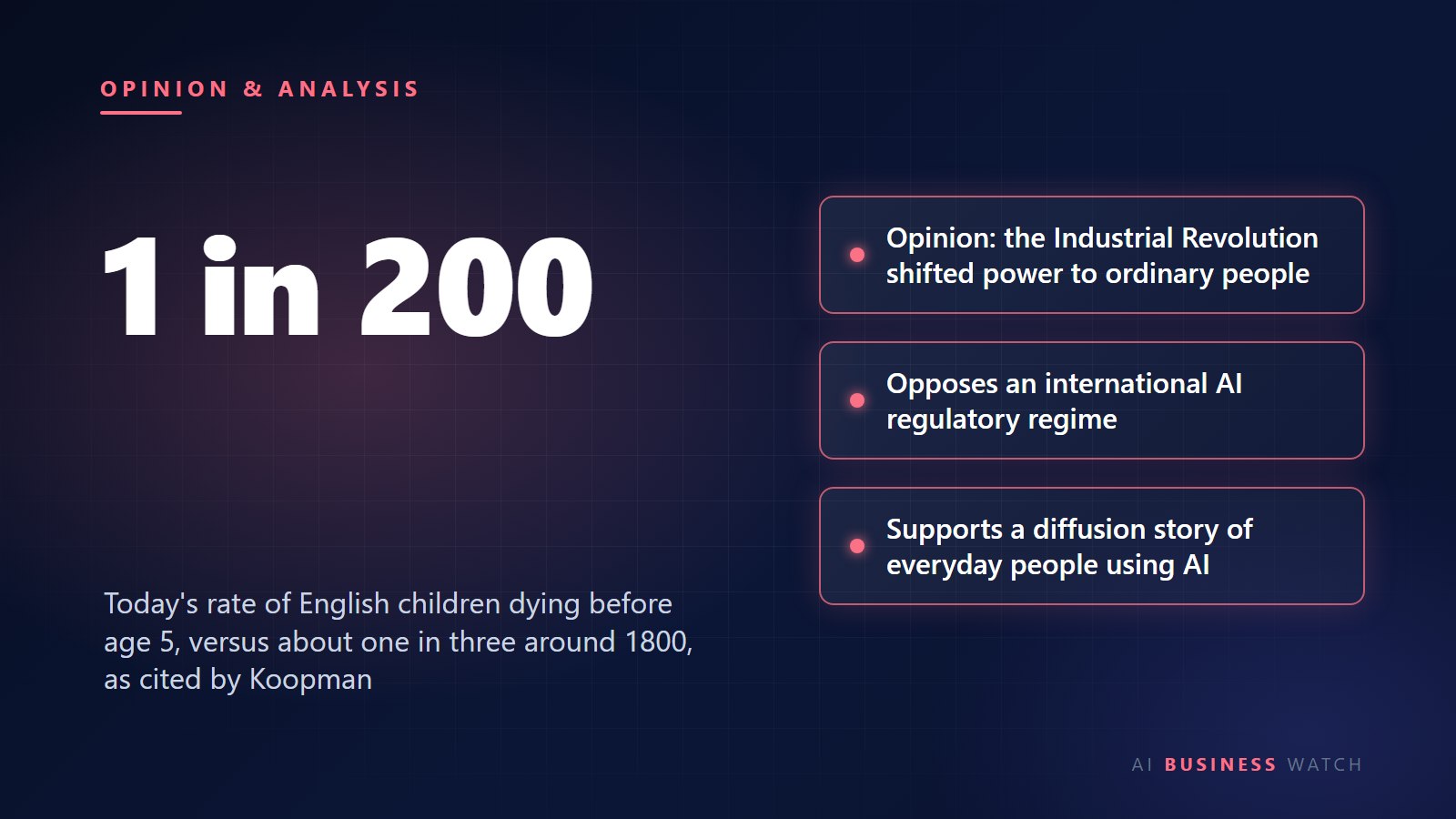
Koopman points to Hobbes describing life in the state of nature as poor, nasty, brutish and short, and says an English builder's day wage bought less food in 1600 than in 1475. Around 1800, about one in three English children died before age 5, he writes, compared with about one in 200 today, and life expectancy has doubled. In 1857, a full-size cast of Michelangelo's David went on view at London's South Kensington Museum, which used gas lighting so working people could visit after their shifts. He also notes that the Wright brothers, described as bicycle mechanics in Dayton, built a flying machine about 400 years after Leonardo da Vinci sketched flying machines. The commentary does not independently verify these figures.
His argument
Koopman contends that the Renaissance was not a period of meaningful economic, social or political progress and that its patrons used their power mainly to enrich their own palaces and places of worship, though he says its art remains valuable. The Industrial Revolution, he argues, shifted power to the masses through democracy, individual rights and the freedom to innovate. He says the AI regulation Altman favors would entrench existing companies, expand bureaucratic control and return to patronage-style rule that benefits what he calls Davos Men.
What he supports
Koopman opposes the international regulatory regime he says Altman hinted at, and the regulation that AI CEOs have called for in recent weeks. He supports a diffusion story in which everyday people use technology to improve daily life, but he does not specify concrete policy mechanisms.
Source: Fortune. This is an AI Business Watch summary of the original commentary.