
Lynnaire Sheridan, an associate professor in the Department of Management at the University of Otago, argues in an October 19 piece in The Conversation that AI shopping agents promise better bargains but may impose costs on vulnerable workers. The argument is hers, and the evidence is cited from other sources.
The context
Meta's recently launched agent, Muse, can send emails, book holidays and complete online forms, and has drawn attention as a personal shopper that can make purchases without user approval, according to a cited CNBC report. Google and OpenAI are also developing AI shopping tools. An AI assistant, she writes, can readily compare prices, delivery times and customer reviews, and she uses a running-shoe example of comparing dozens of retailers within minutes.
The evidence she cites
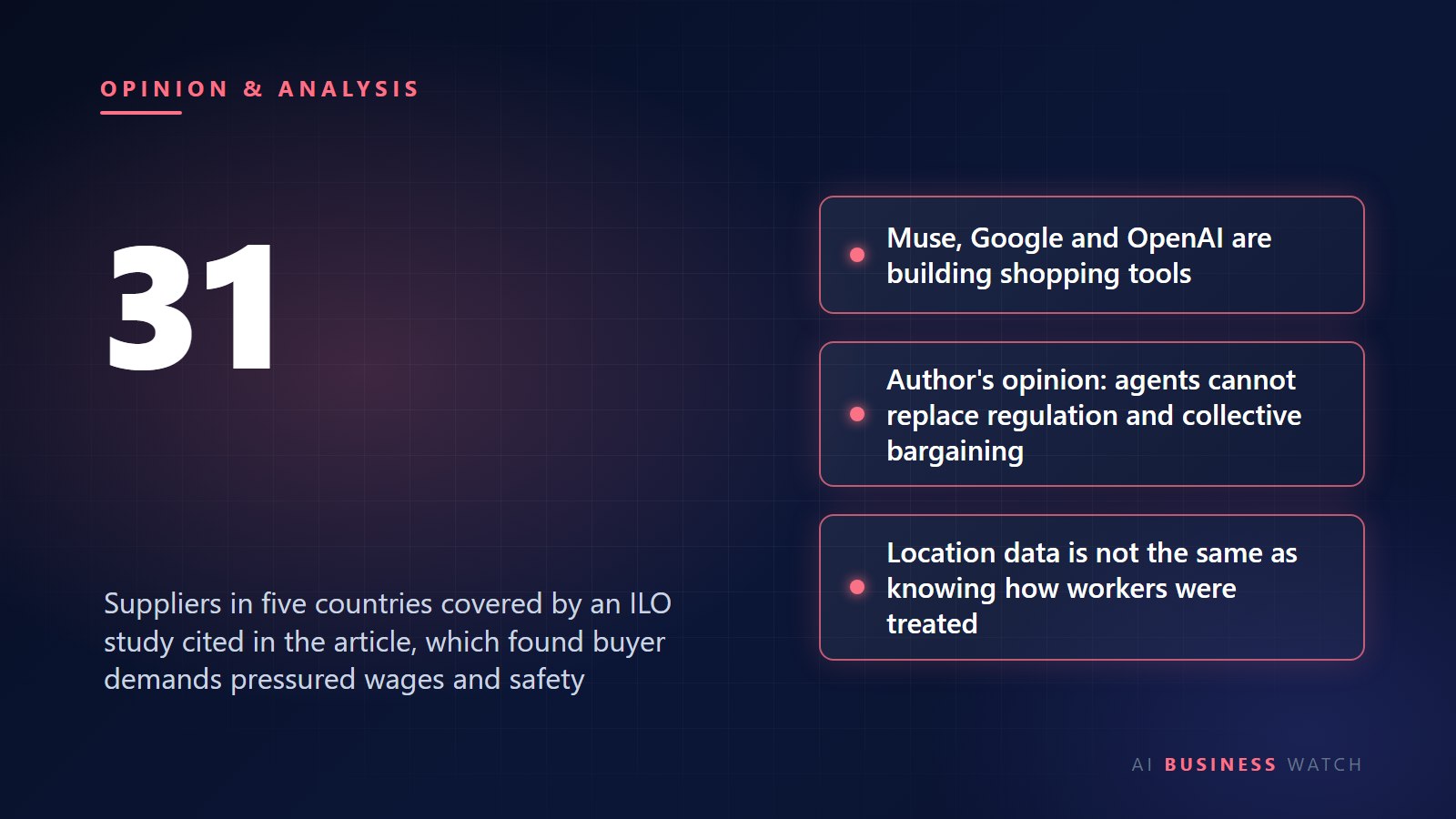
An International Labour Organization study involving 31 suppliers across five countries found that buyers' demands pressured wages, increased overtime and sometimes led factories to cut corners on workplace safety. The article cites ILO estimates that tens of millions of people worldwide live in modern slavery, with forced labor remaining a major problem in manufacturing and agriculture. Open Supply Hub maintains a public database of more than 2.5 million production locations, the OECD has published due diligence guidance for responsible sourcing in garment and footwear, and the ILO's Better Work program has shown that efforts to improve factory conditions can produce results. The article reports no new primary data.
Her argument
Sheridan argues agents could intensify cost pressures on suppliers: some businesses might respond through innovation, but others could look for savings by cutting labor costs. Because consumers are also workers, she says, cheaper goods obtained at workers' expense could reduce their overall financial position. Ethical sourcing claims are hard to verify, she says, and knowing where a product was made is not the same as knowing how workers were treated.
What she implies should happen
The article does not list formal recommendations, but it implies combining supplier location data with independently verified labor standards, relying on independent scrutiny and worker input, strengthening protections for workers' rights and considering how shopping agents are designed to prioritize results. Her view is that AI cannot replace regulation, collective bargaining and accountability.
Source: The Conversation. This is an AI Business Watch summary of the original article.