
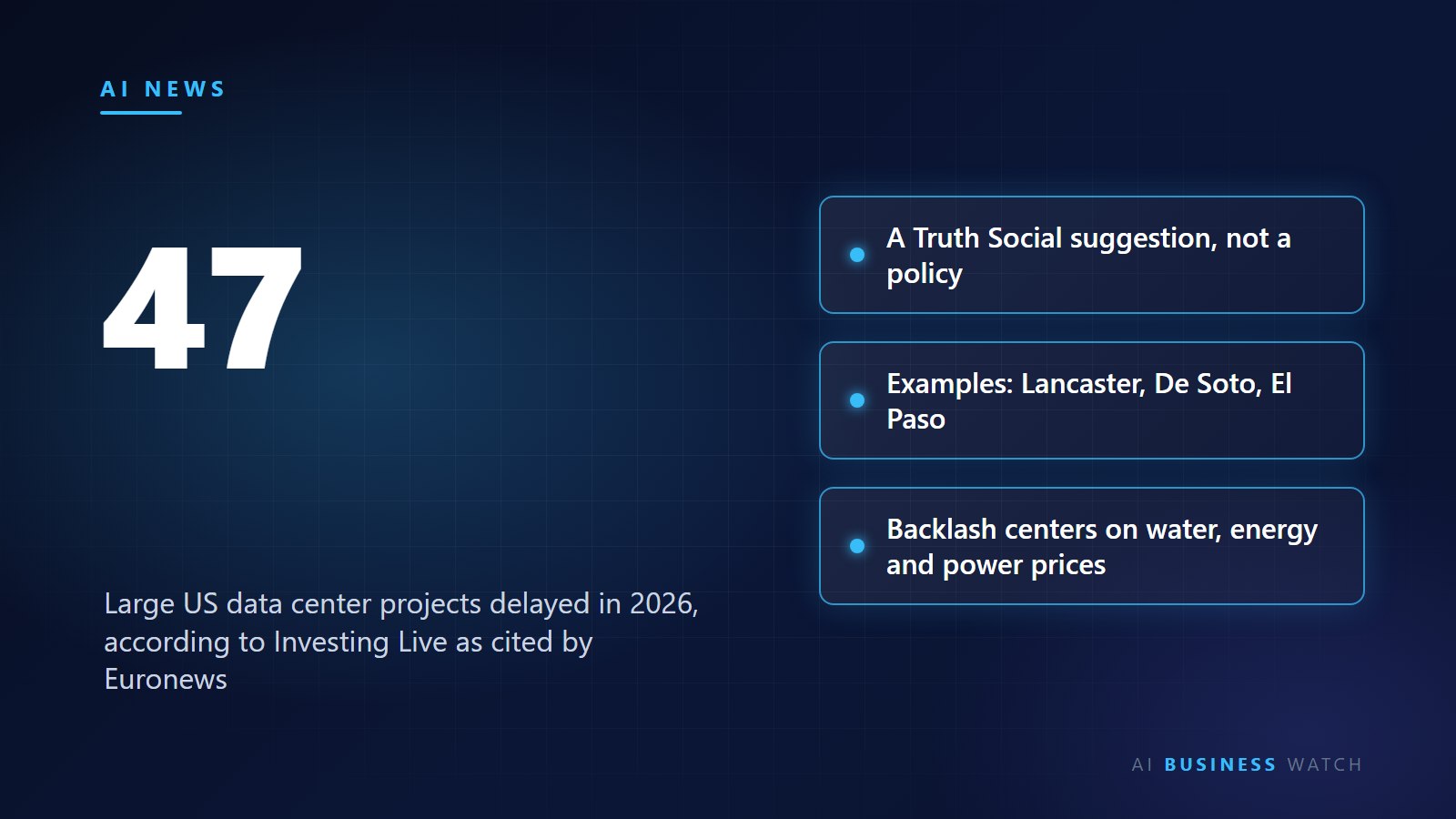
President Donald Trump said on Truth Social on Wednesday that companies building data centers should pay a “dividend” to the communities that host them. Euronews, which reported the post on October 21, stresses that it is a suggestion and not a rule, and that no mechanism for enforcing or funding such payments was described.
What Trump said
Trump wrote that he had been “watching data centers very closely” and had “come to a very strong conclusion”: projects that are unpopular become “extremely popular” once a financial deal addresses residents' concerns. On power, he said he had mandated that data centers generate their own electricity and sell or return any surplus to the local community or grid, which he believes could substantially lower prices. The article does not say how that requirement is enforced.
Examples already on the table
Euronews points to several existing arrangements. In Lancaster, Pennsylvania, a community benefits agreement signed in September for the $6 to $10 billion Lancaster AI Hub includes a $10 million economic development fund, a $10 million sustainable development and clean energy fund, a $250,000 planning fund and $10 million in credit as protection. In De Soto, Kansas, Digital Realty has offered residents $1,000 in utility and property tax credits over 10 years for a 280-acre campus. In El Paso, Texas, a Meta project grew from $1.5 billion to $14 billion, and a deal with the governor requires Meta to pay for electrical infrastructure and reuse its water. Critics, including Democratic gubernatorial nominee Gina Hinojosa, say that deal sets no binding conditions.
Outside the United States
OpenAI said future Irish data centers could include cash for communities, and Germany requires developers in Dietzenbach, where Google is building, to feed excess heat into the grid to lower residents' bills.
Why the issue is live
According to Investing Live, cited by Euronews, at least 47 large projects were delayed in 2026 and more than 1,000 US communities have sought moratoria, zoning caps or environmental limits. The same source projects US AI infrastructure spending above $10 trillion between 2025 and 2032, about 3.6% of GDP a year. The backlash centers on water and energy use, power prices and local environmental impact. The article contains no polling figures.
Source: Euronews. This is an AI Business Watch summary of the original report.