
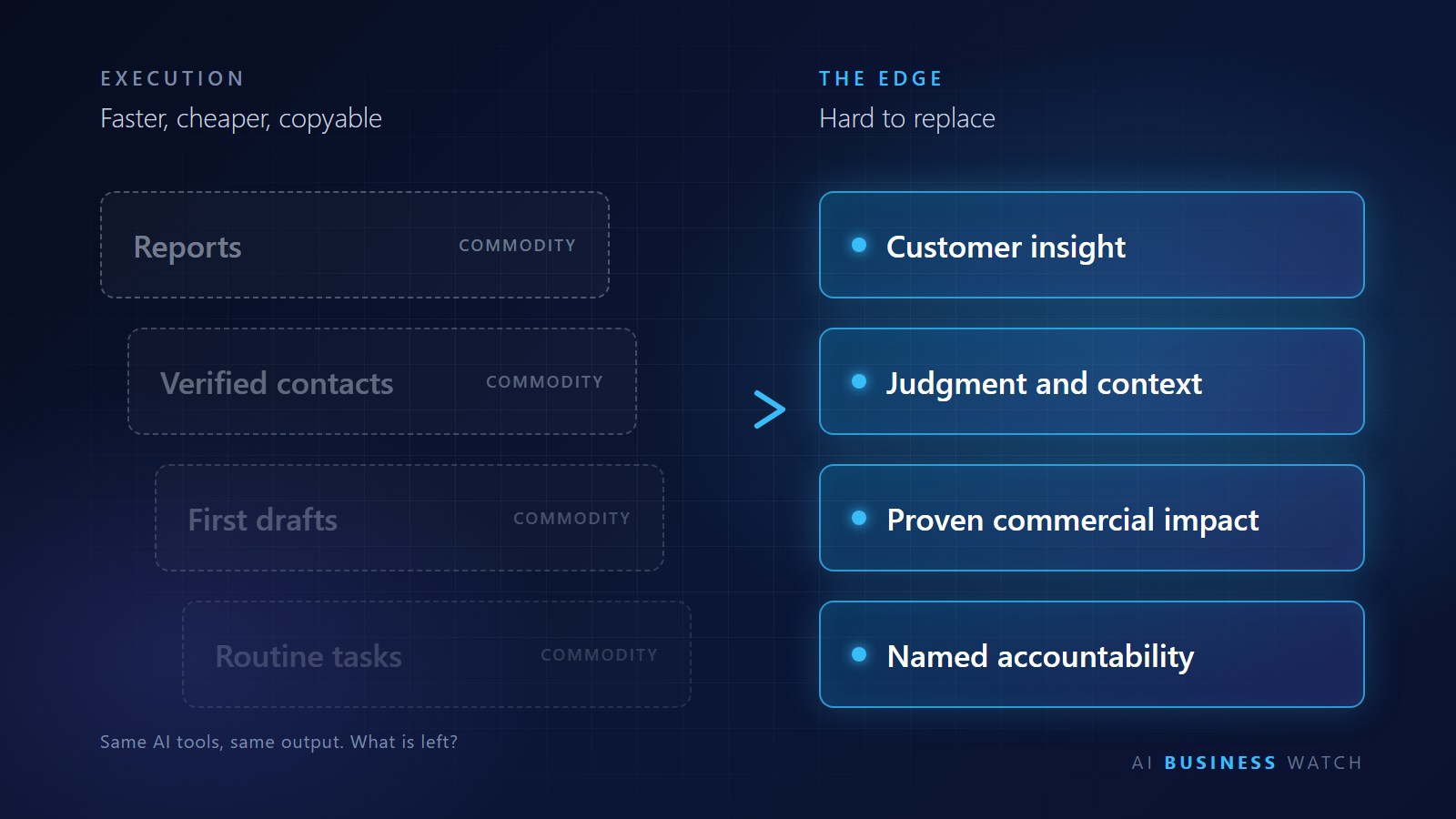
When AI makes routine work cheaper and faster, rivals can copy more of what an intelligence provider delivers. In a piece published October 21 by AITech365 (republished from Fast Company Middle East), Kartik Anand, founder of XDBS, argues that lasting advantage then comes from what sits around the deliverable: understanding the customer, proving commercial results, being honest about what AI really costs to use, and developing people who can take responsibility. XDBS is a B2B intelligence provider that Anand founded in 2012. It now has more than 2,500 people in the Middle East, India, the United States, South Africa and Costa Rica.
Follow the work past delivery
Clients want a clearer link between what they buy and the business result. Anand says providers should seek feedback from the client’s sales team and look at how the intelligence is actually used. They should own the quality of what they deliver, while being honest about what they do not control, such as a client’s pricing or sales follow-up.
AI tools are not a moat
Competitors can buy the same tools. A verified contact does not show whether that person has a real need or whether the timing is right. Anand’s test is whether clients would find the business hard to replace once rivals have similar AI. When a campaign underperforms, he says, the team should find out why instead of simply doing more.
Count the checking
AI output still needs review, and corrections can cancel the time saved. Pilots should be judged against the current baseline under normal conditions, including hard cases and implementation costs. Anand wants the business problem defined before the technology is chosen, and a named owner who keeps the improvement going after the project team leaves.
Keep context as the company grows
Knowledge held in early staff’s heads has to be made accessible. More hiring does not fix unclear ownership and can add handovers. Teams need to know who resolves exceptions and when to escalate.
Design learning on purpose
AI is taking over the preparation work once given to junior staff, and removing routine work does not automatically build skill. Managers should teach the reasoning, test assumptions and put people in front of customer conversations, not only review finished documents. Anand measures development by responsibility: whether someone can spot a problem, explain a recommendation and know when to ask for help.
The closing point
The article ends where it began, with a sales team that has accurate data but does not know whom to call. The provider’s value is helping clients choose where to focus and explaining why. As AI plays a bigger role in decisions, businesses still need people who can judge its recommendations and be accountable for acting on them.
What the article leaves out
- It gives no figures on productivity, cost or error rates, and no evidence of XDBS’s own results.
- It does not say what tools XDBS uses or what exactly it sells.
- Everything comes from one executive, with no independent sources.
- It does not argue against using AI. It argues that the advantage lies in the judgment, data and people around it.
Source: AITech365, republished from Fast Company Middle East. This is an AI Business Watch summary of the original piece.